

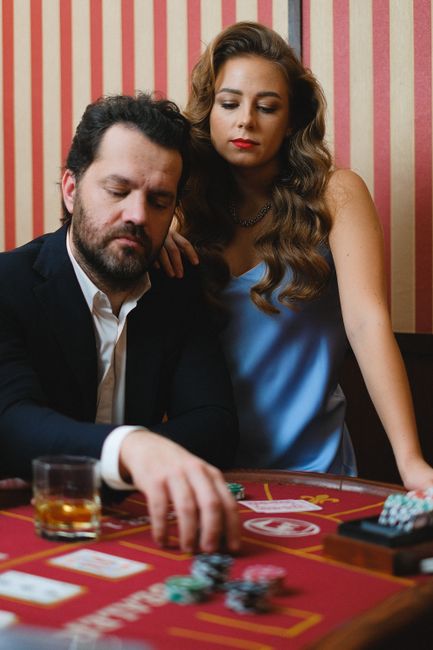
Every gambler has heard the phrase "the house always wins." Most nod along and keep spinning. But the players who actually last — the ones who treat this as entertainment rather than a get-rich scheme — tend to understand exactly why that phrase is true, and where the small cracks of opportunity actually exist. That knowledge separates a fun weekend from a slow, quiet draining of your bankroll.
Let's walk through how the math, psychology, and game design of online casino and betting products really work, in language that doesn't require a statistics degree.
The House Edge Is Not a Scam — It's Rent
Casinos don't make money by cheating. They make money by charging a fee baked into every bet, sometimes called the house edge or the vigorish. On a standard American roulette wheel, that edge is 5.26%. On a European wheel with a single zero, it drops to 2.7%. Over an hour of play, a player betting $10 a spin on a European wheel will lose, on average, about $16 per hour. Sometimes more, sometimes less. But the average is relentless.
This is why you'll see experienced players obsess over seemingly small details:
- Rule variations: A blackjack table that pays 6:5 on naturals instead of 3:2 adds roughly 1.4% to the house edge — a huge swing.
- Single-zero versus double-zero: The difference between European and American roulette halves the casino's take in its favor.
- Slot RTP: A 90% RTP slot returns $90 for every $100 wagered over millions of spins. That 10% gap is the casino's margin.
None of this means you can't win tonight. It means the longer you play, the more the math reverts to its mean. Treat every session as a paid experience, not an investment.
Slots: Volatility Matters More Than RTP
New players obsess over RTP. Smart players talk about volatility and hit frequency. Here's the difference in plain English:
- Low volatility: frequent small wins, slow drain, gentle ride.
- High volatility: long dry spells, rare but massive payouts. Think 5,000x or 10,000x multipliers.
Two slots can share the same 96% RTP and feel completely different. A low-volatility game like Starburst is designed to keep you spinning. A high-volatility monster like San Quentin xWays can eat a $200 balance in twenty minutes and then pay out five figures on the next spin — if you're still there to see it.
Practical tip: if your bankroll is small relative to the bet size, high-volatility slots are brutal. If you have 500 spins at minimum bet available, they become viable. Match volatility to your runway, not to your greed.
Poker Is the Only Game Where You Profit From Other Players
Here's what separates poker from everything else in the casino: you are not playing the house. You're playing other humans, and the house takes a small rake out of each pot — typically 5% capped at $3 or so in live low-stakes games, less online. That's a manageable tax compared to a 5% per-hand rake because you only pay it when you win a contested pot.
The consequence is that long-term winnings in poker come from opponents' mistakes, not from luck or the casino's generosity. The landmark study of online poker hand histories by researchers at the University of Hamburg found that the top 1% of players win consistently, while the bottom 50% lose almost uniformly. Skill compounds. That's not a slogan — it's data. There is a useful overview at สล็อต.
Three leaks that kill amateur players:
- Playing too many hands preflop. If you're seeing a flop with the same frequency as everyone else, you have no edge.
- Calling too much on the river. Most bluff-catching calls at low stakes lose money because opponents simply don't bluff enough.
- Ignoring position. The button exists for a reason. Folding a marginal hand from early position is not weak — it's profitable.
If poker feels like the only game tempted to call "beatable," that's because it is. But the barrier to entry is study time, not cash.
Sports Betting: The Margin Is Hidden in Plain Sight
Bookmakers don't gamble. They balance action and charge a straddle. A typical moneyline on an even NFL matchup might show both sides priced at -110. Bet $110 to win $100 on either team, and you're paying roughly a 4.5% entry fee that is invisible unless you convert odds to probability.
Sharps exploit this by hunting the rare +EV bets (positive expected value) wherever line shopping or promotional offers reveal them. Arbitrage, middles, and matched betting using free-bet promotions are legal methods that grind small edges. They're tedious and often account-limited quickly, but they exist for disciplined bettors willing to treat the book as a spreadsheet.
What doesn't work: chasing parlays. A 10-leg parlay that pays 600x has an expected value that is almost always worse than ten straight bets, because sportsbooks apply additional margin per leg. It's entertainment, not strategy.
Why Bonuses Come With Fine Print (And How to Read It)
That $2,000 welcome bonus is real, but it's not free cash. It's a marketing contract. Three clauses matter most:
- Wagering requirement: "30x" on a $100 bonus means you must wager $3,000 before withdrawal. At a 2% weighted slot contribution, that's a meaningfully negative expectation.
- Game weighting: Slots usually count 100%, table games 10% or 0%, and poker often 0%. Always check the table.
- Max bet per spin: Exceed the $5 limit and the bonus becomes void.
Bonuses aren't traps — they're tools. If you play slots anyway, a fair 35x bonus with low cashout pressure is a small edge. If you were planning to play blackjack, that same bonus might be worth $0 to you.
Playing Smarter Isn't the Same as Playing to Win
The uncomfortable truth is that no system, martingale, or betting pattern changes the underlying expected value. What a system can change is how long you stay at the felt and whether you walk away with something in your pocket or nothing at all.
So here's the mindset that actually works. Set a session bankroll you are genuinely fine losing — the same money you'd spend on a concert ticket. Choose games where the edge is smallest (blackjack with good rules, baccarat, low-rake poker, sports lines with -110 vig) or where skill can overcome it (poker, advantage slots with visible RTP). Never chase. And remember that the biggest edge anyone in this industry has is patience.
The house wins because the math says so. But a player who understands the math, controls time and money, and treats the casino as expensive entertainment rather than a plan is the only one who walks away even. That's not a buzzkill — that's the entire game.


Coding is used in almost all aspects of life and work now, be it directly or indirectly. It’s not just for companies in the tech sector. “An increasing number of businesses rely on computer code,
Coding is used in almost all aspects of life and work now, be it directly or indirectly. It’s not just for companies in the tech sector. “An increasing number of businesses rely on computer code,
Coding is used in almost all aspects of life and work now, be it directly or indirectly. It’s not just for companies in the tech sector. “An increasing number of businesses rely on computer code,