

Ask ten casino players what RTP means and you'll get ten variations of the same vague answer: "it's the payout percentage." Technically true. Practically useless. Because the number that actually shapes your session isn't the RTP printed on the paytable — it's how that percentage gets distributed over the spins you actually play. A 96% RTP slot and a 96% RTP video poker machine can feel like completely different games, and the gap has nothing to do with luck.
Let's cut through the marketing fog and look at what these numbers really do.
RTP Is a Long-Run Average, Not a Promise
Return to Player is calculated over millions of spins — sometimes billions in the case of certified test labs like eCOGRA or GLI. When a slot advertises 96.5%, that figure reflects the theoretical return if you spun forever. Your 200-spin session is a rounding error inside that number.
Here's a concrete example. Say you play a slot with 96% RTP and a medium volatility profile. Over 10,000 spins at $1 each, the expected loss is roughly $400. But the standard deviation on that session is enormous. You might walk away up $800 or down $1,200, and both outcomes sit comfortably inside normal variance. The RTP didn't lie. You just didn't play long enough for it to mean anything.
This is why experienced players care less about the headline RTP and more about volatility. Two games can share the same return and deliver wildly different experiences:
- Low volatility: frequent small wins, slow bankroll bleed, longer sessions
- Medium volatility: balanced hit frequency, occasional 20x–50x wins
- High volatility: rare but huge payouts, brutal dry spells, bankroll-decimating swings
If you've got a $100 bankroll and want two hours of entertainment, high volatility is a trap. If you've got $500 and want a shot at a 500x hit, low volatility will bore you to death before it pays.
The House Edge Lives in the Details
Every game has a house edge, and it's baked into the rules. Understanding where it sits changes how you approach each format. Many readers start with SAO789 when comparing options.
Blackjack with basic strategy and favorable rules (3:2 payouts, dealer stands on soft 17) runs about 0.5% house edge. Play 6:5 payouts on the same game and it jumps to 1.5% or worse. That single rule change costs you three times as much per hand.
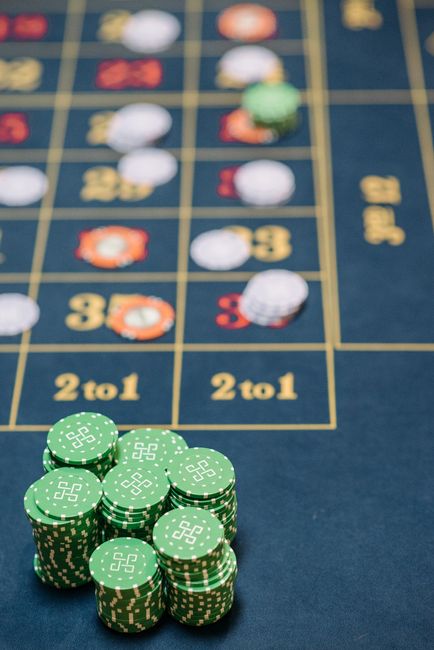
Roulette is simpler. European single-zero wheels carry a 2.7% edge. American double-zero wheels carry 5.26%. The extra green pocket nearly doubles the house advantage, which is why seasoned players walk past American tables without a second glance.
Slots typically range from 2% to 10%, but online slots often sit at the lower end — 3% to 4% — because operators don't have the same real estate costs as land-based casinos. That said, progressive jackpot slots can push the effective RTP below 90% once the jackpot contribution is accounted for.
The takeaway: not all games are created equal, and the difference between a smart choice and a lazy one compounds over hundreds of decisions.
Why Poker Is a Different Animal Entirely
Poker doesn't have a house edge in the traditional sense. You're not playing against the casino — you're playing against other people, with the operator taking a rake from each pot. That changes everything.
A skilled poker player can achieve positive expected value over time. No slot machine or roulette wheel offers that possibility. The casino's cut is fixed and predictable; your edge comes from outplaying opponents.
But here's the catch most beginners miss: the rake is brutal at low stakes. If you're playing $1/$2 no-limit hold'em with a 10% rake capped at $5, the house is taking a meaningful slice of every contested pot. You need to be significantly better than your opponents just to break even. At higher stakes, the rake percentage drops and the game becomes more winnable for disciplined players.
This is why bankroll management matters more in poker than anywhere else. A losing slot session is gone. A losing poker session is data — information about your leaks, your opponents' tendencies, and whether the table is worth staying at.
Practical Bankroll Rules That Actually Work
Most bankroll advice online is recycled nonsense. "Never bet more than 5% of your bankroll" is fine for slots, terrible for poker, and meaningless for sports betting where edge matters more than volume. Here's a more nuanced approach:
- Slots: Size your session at 200–300 spins minimum. If you have $100, play $0.30–$0.50 per spin. Anything higher and variance will end your session in minutes.
- Blackjack: Bring at least 40–50 betting units. Betting $10 per hand means a $500 session bankroll. This absorbs normal losing streaks without forcing you to quit early.
- Poker cash games: Buy in for 100 big blinds and don't reload more than twice in a session. If you're down three buy-ins, the table is either bad for you or you're tilting.
- Sports betting: Flat-bet 1–2% of your bankroll per wager. Chasing losses with bigger bets is how accounts get emptied in a weekend.
The common thread: never let a single session threaten your ability to play tomorrow. Variance is real, and even +EV decisions lose in the short term.
The Bonus Trap Nobody Talks About
Welcome bonuses look generous until you read the wagering requirements. A 100% match up to $500 sounds great — until you discover you need to wager 40x the bonus amount before withdrawing anything.
Do the math. A $500 bonus with 40x wagering means $20,000 in total bets. If you're playing a slot with 96% RTP, the expected loss on those wagers is around $800. You'd need to run well above expectation just to clear the requirement with anything left.
Not all bonuses are traps. Low-wagering (10x or less), no-max-cashout, or sticky bonuses can offer genuine value. But the standard 40x–50x match bonus is designed to keep you playing long enough for the house edge to eat the bonus and then some. Read the terms before you claim anything.
The Only Strategy That Consistently Works
No system beats the house edge in games of pure chance. Martingale, Fibonacci, Paroli — they all fail eventually because they assume infinite bankrolls and no table limits. Neither exists.
What does work is picking games with favorable rules, understanding volatility, managing your bankroll like it matters (because it does), and treating poker and sports betting as skill games where edge is real and worth pursuing. The rest is entertainment spending, and there's nothing wrong with that as long as you call it what it is. You can read more about it on SAO 789.
The players who last aren't the ones chasing jackpots. They're the ones who know exactly what they're paying for — and enjoy the ride anyway.


Coding is used in almost all aspects of life and work now, be it directly or indirectly. It’s not just for companies in the tech sector. “An increasing number of businesses rely on computer code,
Coding is used in almost all aspects of life and work now, be it directly or indirectly. It’s not just for companies in the tech sector. “An increasing number of businesses rely on computer code,
Coding is used in almost all aspects of life and work now, be it directly or indirectly. It’s not just for companies in the tech sector. “An increasing number of businesses rely on computer code,